


Porcelain vs Ceramic Vases: 5 Easy Ways to Tell
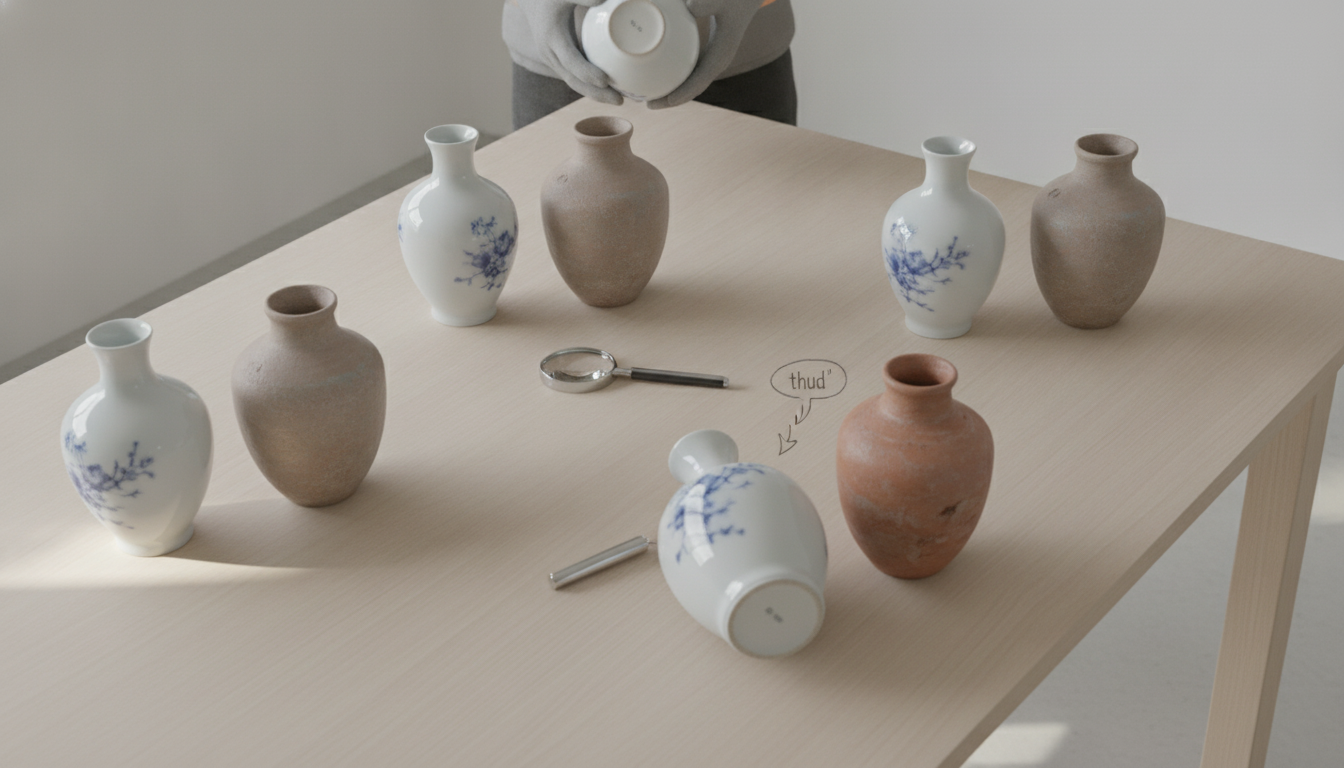
How to tell porcelain from ceramic vases?
Porcelain and ceramic vases can look similar at a glance, but a few quick checks usually reveal what you’re holding. The most reliable clues come from the clay body’s translucency, the weight and feel, the finish, and even the sound it makes when tapped.
Check for translucency in strong light
Hold the vase up to a bright light (or shine a flashlight through the thinnest area). Many porcelain vases will look slightly translucent at the edges, especially on thinner walls. Most common ceramics (like earthenware) are opaque, even when held directly in front of light.
Look closely at the unglazed base
Flip the vase over and inspect the foot ring or any unglazed spot. Porcelain typically has a very fine, smooth, tight-grained body and may appear white to cool gray. Many ceramics show a more porous texture and can range from tan to red-brown depending on the clay used.
Feel the weight and density
Porcelain often feels “dense” and refined for its size, sometimes seeming lighter than expected because it can be made thinner while staying strong. Thicker ceramic bodies may feel heavier and more bulky, especially if the walls are substantial.
Tap test: listen to the ring
Gently tap the vase with a fingernail or a wooden utensil. Porcelain commonly produces a clearer, higher-pitched ring. Many ceramics give a softer, duller sound due to higher porosity and thicker construction. (Avoid this test on delicate pieces or anything with existing cracks.)
Inspect the glaze and detailing
Porcelain glazes often look especially smooth and glassy, and fine painted details can appear crisp. Ceramics can be beautifully finished too, but hand-painted lines may look slightly softer, and some glazes show heavier pooling around edges.
For a deeper walk-through and extra visual cues, see the full guide here: https://topbargainsworld.shop/how-to-tell-porcelain-from-ceramic-vases/.
FAQ
Is bone china the same as porcelain?
Bone china is a type of porcelain that includes bone ash, which can make it especially bright, strong, and slightly more translucent. It’s generally considered part of the porcelain family, but with a distinct formula and look.











Leave a comment